
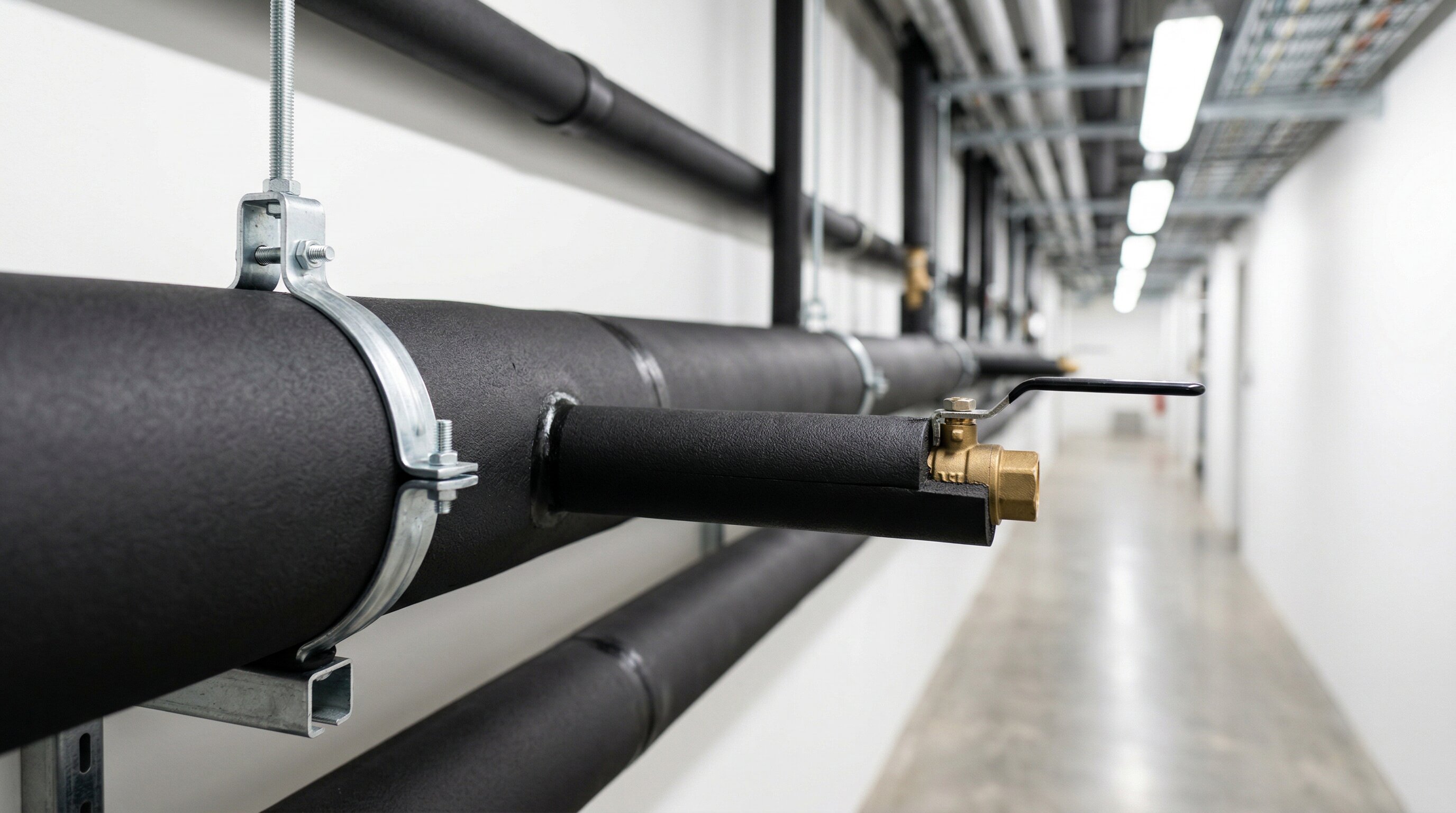
Ireland has become one of Europe's most important data centre markets. With over 80 operational facilities and dozens more in planning or under construction, the country hosts a concentration of digital infrastructure that few would have predicted a decade ago. For M&E contractors and building services engineers delivering these projects, every system must perform flawlessly — and that includes the insulation. In data centres, insulation is not simply about energy efficiency. It is about preventing condensation that could destroy millions of euros worth of equipment in a single incident.
Ireland's Data Centre Boom
Ireland's rise as a global data centre hub has been driven by a convergence of factors: its strategic position at the western edge of Europe, proximity to major transatlantic fibre-optic cable landing points, a favourable corporate tax environment, a skilled English-speaking workforce, and a temperate maritime climate that naturally assists with cooling. Dublin has emerged as the third-largest data centre market in Europe by active power load, behind only London and Amsterdam, and is firmly embedded in the so-called FLAP-D markets that define Europe's digital infrastructure landscape.
As of 2024, Ireland hosts 82 operational data centres, with 14 more under construction and a further 40 granted planning approval — the vast majority clustered in the Greater Dublin Area. However, this growth comes at a significant energy cost. Data centres accounted for 21% of Ireland's total metered electricity consumption in 2023, a figure that has risen from just 5% in 2015. As Tech Monitor has reported, data centre power needs are projected to exceed those of all Irish households by 2027. This extraordinary energy footprint means that every element of data centre design and construction — including insulation — must be optimised for efficiency.
Why Insulation Is Critical in Data Centres
Data centres rely on vast chilled water systems to maintain the precise temperatures that servers require. Chilled water typically circulates at between 6°C and 12°C — well below the dew point in most indoor and outdoor environments. This creates a constant risk of condensation forming on every pipe, fitting, valve, and piece of equipment in the chilled water circuit.
Condensation Prevention
Condensation is the single greatest insulation-related risk in a data centre. When warm, moisture-laden air meets a cold pipe surface, water droplets form. If insulation is missing, damaged, or improperly sealed, that condensation will drip onto server racks, cable trays, power distribution units, or networking equipment below. A single drip point above a server rack can cause damage running into hundreds of thousands of euros, with the potential for far greater losses if an entire hall is affected.
Energy Efficiency
Cooling typically accounts for 30–40% of total energy consumption in a data centre. Even small insulation deficiencies — a poorly sealed joint, a section of exposed pipe, compressed or damaged insulation — result in thermal gain on chilled water lines, forcing the chiller plant to work harder. When multiplied across kilometres of pipework in a large facility, the cumulative effect on energy consumption and operational costs is substantial.
Programme and Schedule Pressure
Data centre construction programmes are among the most aggressive in the industry, often with penalties for late handover. Insulation is a critical-path trade that must be completed before systems can be commissioned. M&E contractors need insulation subcontractors who can mobilise experienced crews quickly, work efficiently in congested plant rooms, and deliver consistent quality under programme pressure.
Key Insulation Challenges in Data Centres
Data centre insulation presents a distinct set of challenges that differentiate it from standard commercial or industrial mechanical insulation work. Understanding these challenges is essential for M&E contractors selecting an insulation subcontractor.
Vapour Barrier Integrity on Cold Pipework
On chilled water systems operating below the dew point, the vapour barrier is arguably more important than the insulation itself. Every joint, termination, and penetration must be perfectly sealed to prevent warm, moist air from reaching the cold pipe surface. A single gap — even a few millimetres — can allow moisture to migrate through the insulation over time, eventually causing condensation from the inside out. This type of failure is particularly insidious because it is invisible from the outside until water begins dripping from the cladding.
On chilled water systems, a single missed joint or gap in the vapour barrier can allow moisture ingress that leads to hidden condensation — dripping onto servers and equipment worth millions. Unlike hot systems where a poor joint simply wastes energy, a poor joint on cold insulation can cause immediate and catastrophic damage to the facility it serves.
Large-Diameter Pipework and Precision Cladding
Data centre chilled water systems typically involve large-diameter pipework — 150mm, 200mm, 300mm and above — running through plant rooms, risers, and distribution corridors. Aluminium cladding sections must be accurately formed, fitted, and sealed. Poorly fitted cladding on large pipes creates gaps that compromise both the weather barrier and the visual finish. Across hundreds or thousands of metres of large-bore pipework, the cumulative effect of imprecise cladding work is significant.
Working Around Sensitive Equipment and Cleanliness
In many data centre projects, insulation work must be carried out in close proximity to live equipment — or in areas that will soon house sensitive servers and networking hardware. Insulation engineers must avoid generating dust, debris, or loose fibres, and work areas must be left spotless. Data centres operate to strict cleanliness standards — airborne particles, including fibres from insulation materials, can damage sensitive electronic equipment and reduce the efficiency of cooling systems. This often means using low-particulate materials, controlling cutting and fabrication processes, and maintaining rigorous housekeeping throughout the installation.
Coordination with Multiple Trades
Data centre plant rooms are among the most congested spaces in modern construction — pipework, ductwork, cable trays, electrical distribution, fire suppression, and BMS sensors all compete for the same space. Insulation must be carefully coordinated with other trades to ensure access, avoid clashes, and maintain programme sequence. Experienced crews understand this environment; less experienced teams often struggle with the spatial constraints of a live data centre programme.
Materials Used in Data Centre Insulation
The choice of insulation material in a data centre depends on the system being insulated, the operating temperature, the space available, and the specific performance requirements of the project. Three materials dominate data centre insulation specifications in Ireland.
Armaflex and Elastomeric Foam Insulation
Armaflex — and equivalent elastomeric closed-cell foam products — is the most widely specified insulation for chilled water systems in data centres. Its closed-cell structure acts as an integral vapour barrier, eliminating the need for a separate vapour retarder in many applications. It is flexible, lightweight, and can be applied quickly to both straight runs and complex fittings. Armaflex is particularly well-suited to data centre environments because it is fibre-free, producing no airborne particulates during installation. It is available in tube and sheet form, in a range of thicknesses to suit different pipe sizes and operating conditions.
Mineral Wool with Aluminium Cladding
For low-temperature hot water (LTHW) heating systems, domestic hot water, and general mechanical services, mineral wool pipe sections with aluminium foil facing and external aluminium sheet metal cladding remain the standard specification. Mineral wool provides excellent thermal performance across a wide temperature range and is non-combustible — a critical consideration in buildings containing high-value equipment. All mineral wool insulation used should have aluminium foil backing — exposed bare fibreglass has no place in a data centre environment.
Phenolic Foam Insulation
Where space is limited — and in data centres, it frequently is — phenolic foam offers the highest thermal performance per unit thickness of any commonly available insulation material. Its low thermal conductivity means thinner sections can achieve the same performance as thicker mineral wool or elastomeric foam, which is particularly valuable in congested plant rooms and risers. Phenolic foam is also non-combustible, adding another layer of protection in high-value environments.
Why the Contractor Matters
In data centre construction, the quality of the insulation installation is only as good as the people doing the work. This is not a sector where you can afford to learn on the job. The consequences of poor workmanship — condensation, energy loss, rework, programme delays — are too severe and too costly.
Vapour Barrier Expertise
Correctly installing and sealing vapour barriers on cold insulation is a specialist skill that takes years to develop. It requires an understanding of how moisture moves through insulation systems, where the vulnerable points are, and how to seal every joint, termination, and penetration to create a continuous, unbroken barrier. The consequences of getting it wrong are not immediately visible — condensation problems caused by poor vapour barrier installation often only become apparent weeks or months later, by which time the facility may be operational and remediation becomes enormously disruptive and expensive.
Large-Scale Project Experience
A single hyperscale facility can require insulation to tens of thousands of metres of pipework, hundreds of valves and fittings, and numerous pieces of plant equipment — all within an aggressive programme. This demands a contractor experienced in managing large-scale insulation works: planning resource allocation, maintaining quality across multiple work fronts, and coordinating with the principal contractor and other trades. Companies that have delivered multiple data centre projects understand the pace and the standards in a way that general insulation contractors do not.
Cleanliness and Programme Reliability
The ability to work cleanly is not optional in a data centre — it is a fundamental requirement. Insulation contractors must maintain site cleanliness standards, control dust and fibres, and leave work areas in a condition that meets the operator's requirements. Equally, data centre programmes do not tolerate delays. Insulation sits on the critical path ahead of commissioning, and a contractor who cannot maintain the programme — whether due to resource shortages, quality issues, or poor coordination — creates a knock-on effect that impacts the entire project.
The Labour-Only Subcontracting Advantage
For M&E contractors delivering data centre projects in Ireland, the labour-only subcontracting model offers significant advantages. The insulation subcontractor supplies skilled labour, tools, and expertise, while the principal contractor procures the materials. This model is well-established in Irish mechanical contracting and offers several benefits for data centre work.
- Cost transparency — The M&E contractor purchases materials directly, often at better rates through existing supply agreements, with full visibility of costs.
- Material control — The principal contractor manages specifications, delivery schedules, and stock levels, ensuring that the right materials arrive when needed.
- Flexibility — Labour-only arrangements allow resource scaling up or down as the programme demands, without being locked into fixed-price packages.
- Quality assurance — With specifications controlled by the principal contractor and installation by an experienced specialist, accountability is clear.
- Reduced risk — Separating material supply from installation labour reduces exposure to supply chain disruptions and price fluctuations.
This model works particularly well in data centres, where material specifications are tightly defined by the operator or their consultants and the M&E contractor needs maximum flexibility to manage a complex programme.
Alumitherm Assist provides specialist labour-only insulation and cladding services for data centre projects across Dublin and the greater Leinster area. Our founder brings over 40 years of hands-on experience, and every engineer on our team has 20+ years in the trade. We have delivered insulation works on data centre projects for leading M&E contractors — working to the exacting standards these facilities demand. From chilled water systems requiring flawless vapour barriers to large-bore LTHW pipework with precision aluminium cladding, we bring the experience and discipline that data centre construction requires.
Getting It Right from the Start
Data centre insulation is not an area where corners can be cut or where the cheapest quote should win the job. The cost of failure — condensation damage, energy waste, programme delays, and rework — far exceeds any saving made by choosing an inexperienced contractor. For M&E contractors and building services engineers working on data centre projects in Ireland, the choice of insulation subcontractor directly affects the performance, reliability, and long-term operating costs of the completed facility.
With new facilities continuing to be planned and built across the Greater Dublin Area and beyond, the demand for skilled, experienced insulation engineers who understand the unique challenges of this sector will only grow. The contractors who invest in quality — in their people, their processes, and their standards — are the ones who will continue to deliver the results that this demanding industry requires.
Planning a Data Centre Insulation Project?
Get in touch with our experienced team to discuss your insulation requirements. We provide specialist thermal insulation and cladding services for data centre projects across Dublin and the greater Leinster area.
Contact Us