
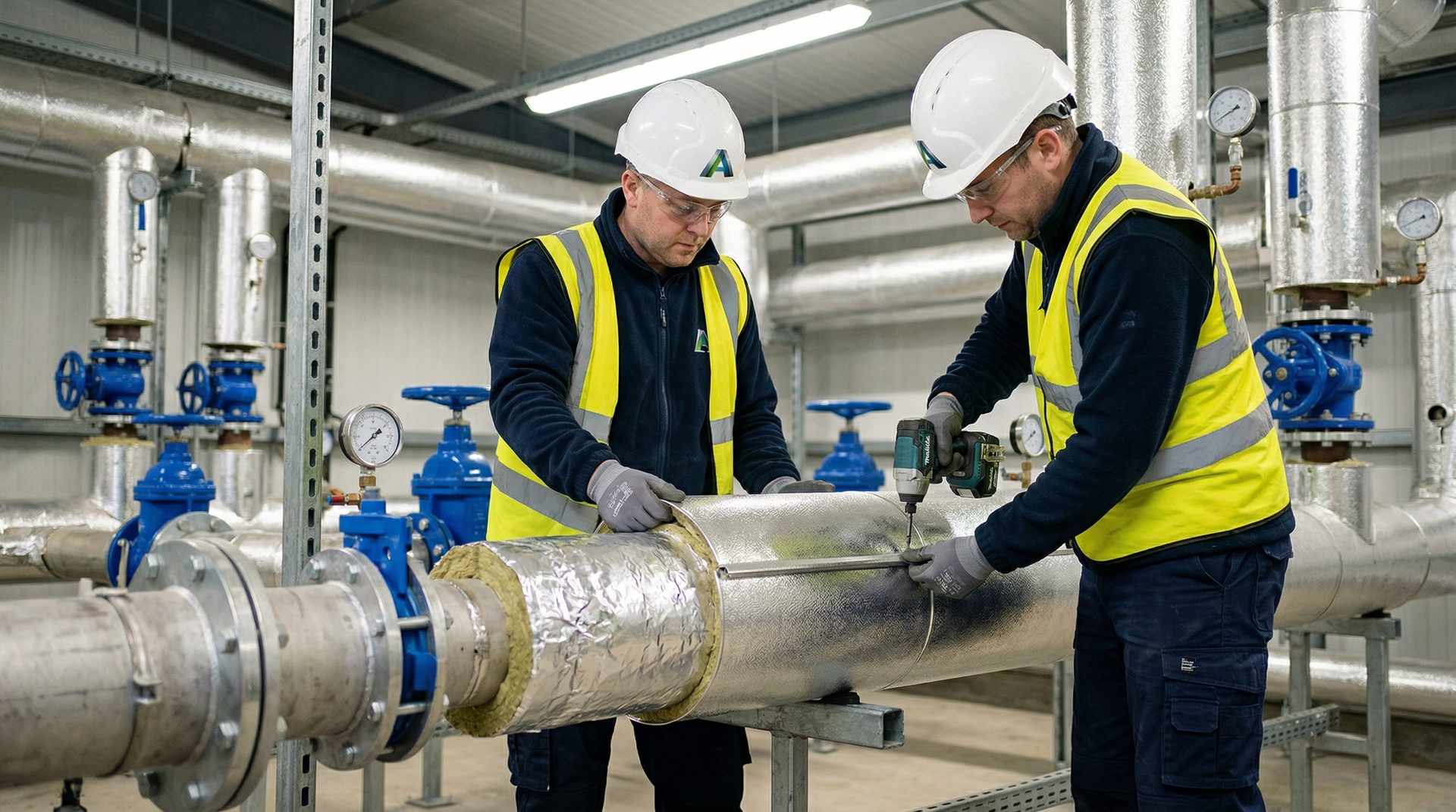
If you work in construction in Ireland — whether as a main contractor, M&E contractor, or project manager — you will almost certainly have come across the term "labour-only subcontractor." It is a model that has been used in the insulation trade for decades, and it is how we operate at Alumitherm Assist. But the term can be misunderstood, and its advantages are not always fully appreciated by those who have not worked with it before. This article explains what labour-only insulation subcontracting actually means, how it works in practice, and why it is increasingly the preferred model for insulation procurement on commercial and industrial projects in Ireland.
The Basic Concept
In a traditional "supply and install" arrangement, the insulation subcontractor procures all the insulation materials, cladding, and sundries, and then installs them. The main contractor or M&E contractor receives a single price that covers everything — materials and labour bundled together.
In a labour-only arrangement, the split is different:
- The main contractor (or M&E contractor) procures the insulation materials — typically through their own supply chain or a nominated supplier specified by the consulting engineer.
- The insulation subcontractor provides the skilled tradespeople to install those materials. The subcontractor's price covers labour, supervision, hand tools, and the expertise to install the insulation and cladding to the required specification.
In practice, the main contractor buys the insulation materials and delivers them to site. The labour-only subcontractor takes those materials and installs them — cutting, fitting, sealing, and cladding every pipe, duct, vessel, and piece of equipment as specified.
Why the Labour-Only Model Works
The labour-only model has become popular in the Irish insulation industry for a number of practical reasons. Each of these benefits is significant in its own right, and together they make a compelling case for why this approach is often the better choice.
1. Material Cost Transparency
When a subcontractor supplies and installs, the material costs are embedded in their overall price. The main contractor cannot easily see what the materials actually cost versus what margin has been applied. With labour-only, the main contractor procures materials directly — they see the actual supplier invoices, they know exactly what they are paying, and they can compare prices between suppliers.
On larger projects, where insulation material costs can run into tens of thousands of euros, this transparency can represent significant savings. It also eliminates disputes about material pricing, because the main contractor is making those purchasing decisions themselves.
2. Specification Control
One of the biggest risks with supply-and-install subcontracting is material substitution. Under programme pressure or to protect margins, a subcontractor may be tempted to substitute a cheaper material that they consider "equivalent" to what was specified. Sometimes this is acceptable; often it is not — particularly on projects where the insulation specification has been carefully developed by the consulting engineer to meet specific thermal, acoustic, fire, or condensation requirements.
When the main contractor procures materials to the specification, this risk is eliminated. The materials that arrive on site are the materials that were specified. The labour-only subcontractor installs what they are given.
3. Flexibility in Procurement and Phasing
Construction programmes change. Areas become available earlier or later than planned. Specifications get revised. Quantities change as the design develops through construction. With a labour-only arrangement, the main contractor can adjust material orders as needed — calling forward materials for areas that are ready and deferring orders for areas that are delayed. This flexibility is much harder to achieve when materials are bundled into a subcontractor's fixed-price package.
4. Reduced Subcontractor Risk
For the main contractor, one of the risks of a supply-and-install subcontract is that if the insulation subcontractor gets into financial difficulty, the materials may not arrive — or worse, materials that have been paid for as part of stage payments may not yet have been purchased. With labour-only, the main contractor owns the materials from the outset. If there is ever a change of subcontractor (for whatever reason), the materials are on site and belong to the main contractor.
5. Better Cash Flow Management
Material procurement can be phased to match the construction programme and the main contractor's cash flow requirements. Rather than a large material payment upfront (as is often required in supply-and-install arrangements), materials can be called off in stages as they are needed. The labour-only subcontractor's payments are based on measured work completed, providing a clear and auditable payment structure.
The labour-only model separates material cost from installation cost, giving the main contractor transparency on both. This is particularly valuable on projects where insulation materials represent a significant proportion of the overall insulation package cost.
How Labour-Only Works in Practice
The practical mechanics of a labour-only insulation subcontract are straightforward, but there are some important details that need to be managed properly for the arrangement to work well.
Tender and Appointment
The main contractor issues the insulation specification, drawings, and scope of works to the labour-only subcontractor for pricing. The subcontractor prices the installation labour — typically as a lump sum, a rate per metre run (for pipework), a rate per square metre (for ductwork and vessels), or a schedule of rates. The price does not include materials — these are excluded and are the main contractor's responsibility.
The subcontract agreement should clearly define:
- The scope of installation work included
- The specification and quality standards to be achieved
- Who provides what — typically the main contractor provides all insulation materials, cladding, and major fixings, while the subcontractor provides hand tools, small consumables (tape, sealant, rivets), and their own PPE
- Material handling responsibilities — who unloads deliveries, who stores materials, who moves them to the work areas
- Programme requirements and key dates
- Payment terms and measurement methodology
Material Procurement
The main contractor procures insulation materials based on the specification and the quantities derived from the mechanical drawings. This is typically done through established insulation material suppliers who can advise on product selection, provide technical data sheets, and offer competitive pricing.
For the procurement to work smoothly, the main contractor needs to:
- Order materials in sufficient time — insulation materials are not always ex-stock, and lead times for specialised products can be several weeks
- Coordinate with the labour-only subcontractor on what materials are needed and when — the subcontractor should provide a material schedule or call-off list
- Ensure materials are delivered to site in a timely manner and stored properly — insulation materials can be damaged by moisture, and some materials (particularly mineral wool and phenolic foam with aluminium foil outer facing) must be kept dry
Installation
Once materials are on site, the labour-only subcontractor installs them in accordance with the specification. The subcontractor provides experienced insulation engineers who carry out all cutting, fitting, sealing, and cladding work. The subcontractor is responsible for the quality of the installation — ensuring that every joint is properly sealed, every vapour barrier is intact, every piece of cladding is neatly fitted and secured.
Good communication between the main contractor and the labour-only subcontractor is essential. The subcontractor needs to know which areas are available for insulation, what the priorities are, and what the programme milestones are. In return, the subcontractor should provide regular progress updates and flag any issues — missing materials, access problems, specification queries — promptly.
Measurement and Payment
Labour-only subcontractors are typically paid on the basis of measured work completed. This might be measured by:
- Metre run of pipework insulated (by diameter and insulation thickness)
- Square metre of ductwork insulated
- Number of fittings completed (valves, flanges, bends, tees)
- Agreed lump sums for specific areas or systems
Regular site measurements and valuations ensure that payments reflect actual progress. This is a fair and transparent system that works well for both parties.
Common Concerns — and Honest Answers
Main contractors who have not used the labour-only model before sometimes have concerns. Here are the most common ones, addressed honestly.
"Does it create more work for us?"
Yes, there is some additional procurement and coordination effort involved in managing the material supply separately from the installation. But on any well-managed project, the main contractor is already coordinating materials across multiple trades. Adding insulation materials to that process is not a significant burden — and the benefits in cost transparency, specification control, and flexibility more than compensate.
"What if the subcontractor wastes our materials?"
Material wastage is a legitimate concern with any insulation installation. Experienced tradespeople minimise waste through careful measuring, cutting, and planning. At Alumitherm Assist, our insulation engineers each have a minimum of 20 years of trade experience — they understand the value of materials and take care to minimise waste. That said, a reasonable wastage allowance (typically 5–10% depending on the complexity of the installation) should be factored into the material procurement.
"Is it harder to manage two contracts instead of one?"
Arguably, it is simpler. With supply and install, material and labour issues are intertwined — if there is a delay, is it because the materials were not ordered on time, or because the labour was not available? With labour-only, the responsibilities are clear. The main contractor manages materials; the subcontractor manages installation. If materials are on site and the work is not progressing, the reason is clear. If the work is ready but materials have not arrived, that is equally clear.
"What about warranty and liability?"
The labour-only subcontractor warrants their workmanship — that the installation has been carried out in accordance with the specification and to a professional standard. The material manufacturer warrants the materials. This is essentially the same split of liability that exists in most construction subcontracts when you examine it closely. The key is to ensure that the subcontract agreement clearly defines the scope of the labour-only subcontractor's obligations.
When Labour-Only Is the Right Choice
The labour-only model is particularly well suited to:
- Large commercial and industrial projects — Where material costs are significant and transparency is valued by the client
- Projects with complex specifications — Where the consulting engineer has specified particular materials and the main contractor wants to ensure those materials are used
- Pharmaceutical and clean room projects — Where material traceability and documentation are critical
- Data centre projects — Where the main contractor has established relationships with insulation material suppliers and wants to procure directly
- Projects with staged or phased programmes — Where material procurement needs to flex with the construction programme
- Framework agreements — Where the main contractor has negotiated pricing with material suppliers across multiple projects
When Supply and Install Might Be Better
To be fair, there are situations where supply and install may be more appropriate:
- Small projects — Where the material procurement effort is disproportionate to the project value
- Simple specifications — Where the insulation requirements are straightforward and substitution risk is low
- Design-and-build projects — Where the insulation subcontractor is contributing to the design and material selection
There is no single correct answer — the right model depends on the project, the client's requirements, and the main contractor's preferences. But in our experience, the majority of mid-to-large M&E projects in Ireland benefit from the labour-only approach.
The Role of the Labour-Only Subcontractor
It is worth emphasising that a labour-only subcontractor is not just providing "bodies on site." A good labour-only insulation subcontractor provides:
- Skilled tradespeople — Insulation engineers with genuine trade experience, not recently trained operatives. At Alumitherm Assist, every member of our team has a minimum of 20 years of hands-on experience.
- Supervision and coordination — A working supervisor who coordinates with the main contractor, manages the insulation team's programme, and ensures quality standards are maintained.
- Technical knowledge — The ability to read and interpret insulation specifications, identify potential issues, and raise them proactively.
- Quality of workmanship — The standard of the finished installation reflects directly on the labour-only subcontractor. Our reputation depends on the quality of every joint, every seal, and every piece of cladding we install.
- Health and safety compliance — Full compliance with site safety requirements, including Safe Pass, manual handling, and working at height.
We operate as a specialist labour-only insulation subcontractor, serving projects across Dublin, Kildare, Wicklow, Meath, and the greater Leinster area. Our founder has over 40 years of personal hands-on experience in the insulation trade, and every member of our team has a minimum of 20 years. We believe the labour-only model delivers the best outcome for our clients — transparent costs, specification compliance, and the highest standard of installation by experienced tradespeople.
Making It Work: Practical Tips
If you are considering using a labour-only insulation subcontractor for the first time, here are some practical tips to help the arrangement work smoothly:
- Involve the subcontractor early — Even though they are not supplying materials, an experienced labour-only subcontractor can advise on material quantities, installation sequences, and access requirements during the planning stage.
- Agree the material/labour split clearly — Define in writing who provides what. Typically: main contractor provides all insulation, cladding, and major fixings. Subcontractor provides hand tools, sealants, tapes, rivets, and similar consumables.
- Plan material deliveries — Work with the subcontractor to schedule material deliveries so that the right materials are on site when the team needs them. Storage space on site is often limited, so phased deliveries are usually better than one large delivery.
- Allow for wastage — Factor in a reasonable wastage allowance when ordering materials. Complex installations with many fittings, bends, and small sections will generate more waste than long straight runs.
- Communicate the programme — Keep the subcontractor informed of programme changes, access dates, and priorities. Good communication prevents wasted time and ensures labour is deployed efficiently.
- Measure regularly — Agree a measurement and valuation schedule that keeps payments aligned with progress. Monthly valuations based on site measurements are standard practice.
The labour-only model is not complicated, and it is not new. It has been used successfully in the insulation trade for decades, and it continues to be the preferred approach for many of the leading M&E contractors in Ireland. If you have not used it before, we would encourage you to consider it for your next project — the benefits are real and the risks are manageable.
If you would like to discuss how a labour-only arrangement could work for your project, please get in touch. We are always happy to talk through the options.
Interested in Labour-Only Insulation Subcontracting?
Get in touch with our team to discuss your project requirements. We provide specialist thermal insulation and sheet metal cladding services on a labour-only basis across Dublin and the greater Leinster area.
Contact Us